

Katelyn Katzer, Recognized by Influential Women, Leads Sustainable Farmland Preservation Across Somerset County Plans
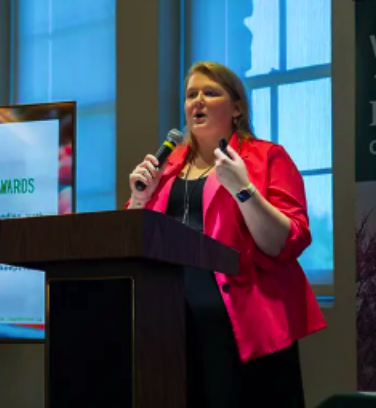
Katelyn Katzer is the Farmland Preservation Manager and SCADB Administrator for Somerset County, New Jersey, where she leads the County’s Farmland Preservation Program with a mission centered on protecting agricultural land, supporting local farmers, and preserving farming traditions for future generations. Over the course of a 17-year career in environmental planning, Katelyn has built deep expertise in farmland preservation, sustainable land use, open space management, and agricultural policy while becoming a trusted advocate for both farmers and the long-term viability of agriculture within her community.
Her work focuses not only on preserving farmland in perpetuity, but also on strengthening local food systems, protecting agricultural heritage, and ensuring future generations maintain access to farms, fresh food, and open agricultural landscapes. Through partnerships with state agencies, municipalities, nonprofits, and the farming community itself, Katelyn has helped position Somerset County as a leader in innovative and forward-thinking farmland preservation efforts.
Katelyn’s professional journey did not originally begin in planning. Early in her academic career, she intended to pursue pharmaceutical biology with a focus on cancer research. However, after feeling increasingly drawn toward sustainability and environmental issues, she made the decision to change her major to environmental science—a choice that ultimately led her to discover her passion for environmental planning and land preservation.
Influenced in part by her mother, who worked as an environmental planner, Katelyn quickly realized she was most fulfilled working at the intersection of environmental stewardship, public service, and community development. Her early career included roles with the Freehold Soil Conservation District, where she gained firsthand understanding of how construction activities affect soil health, stormwater systems, and water quality. She later worked with the Monmouth County Park System, contributing to open space preservation projects and the development of public recreational spaces, including a pocket park in Asbury Park.
Katelyn also gained valuable experience at the state level, where she learned how policy development, rulemaking, and evolving regulations directly shape environmental planning and preservation efforts. Those experiences provided her with a broad understanding of the complexities involved in balancing environmental protection, development pressures, and agricultural sustainability.
Ultimately, Katelyn found her professional calling in farmland preservation at the county level. Upon joining Somerset County, she inherited what had become a largely dormant farmland preservation program. Serving as the sole administrator, she revitalized the initiative through strategic leadership, organizational restructuring, and extensive outreach efforts designed to rebuild trust within the agricultural community.
Under Katelyn’s leadership, the program underwent a complete transformation. She rebranded the initiative, developed educational materials, created internal tracking systems, and established stronger communication channels with farmers and agricultural stakeholders. Her ability to build relationships and demonstrate a sincere commitment to supporting rather than regulating farmers helped foster trust within a community that can sometimes approach government programs with understandable skepticism.
Today, Katelyn’s work spans both preserved and unpreserved farms and includes navigating Right-to-Farm cases, resolving farmer-neighbor-township disputes, and helping agricultural families maintain ownership of their land while utilizing preservation funding to support farm operations, expansion, or retirement planning. Her efforts have earned recognition from state organizations, with Somerset County’s program being described as “cutting edge” for its innovation and impact. The program has also received awards and legislative recognition for its contributions to farmland preservation and agricultural sustainability.
Katelyn attributes much of her success to the support system surrounding her throughout both her education and career. When she changed majors early in college, her parents remained unwaveringly supportive and continued encouraging her as she discovered her place within environmental planning. She also credits her husband’s ongoing support for allowing her to dedicate the energy and commitment necessary to grow and strengthen the preservation program.
In addition, Katelyn expresses deep gratitude toward the County Commissioners whose leadership and recognition of agriculture’s importance helped create an environment where the program could succeed. She believes the County’s commitment to preserving farmland and supporting agriculture has been instrumental in the program’s continued growth and effectiveness.
Equally meaningful to her has been the support and trust of the farming community itself. Katelyn acknowledges that building those relationships required patience, consistency, transparency, and a genuine commitment to demonstrating that her role was to support farmers rather than create obstacles for them. In her view, meaningful success is never achieved individually, but rather through collaboration, trust, and the support of an entire community.
One of the most valuable pieces of career advice Katelyn has received is to continually pursue opportunities for professional growth through trainings, certifications, licensing, and ongoing education. She believes maintaining a broad and adaptable skill set is especially important in smaller or highly competitive industries because it allows professionals to evolve alongside changing regulations, policies, and industry demands.
Katelyn also encourages young women entering environmental planning and preservation fields to explore a variety of specialties early in their careers. She believes internships, temporary positions, and diverse professional experiences help build confidence, perspective, and clarity before making long-term career commitments. Watching former interns from her own program discover careers in preservation and agriculture planning has become one of the most rewarding aspects of her leadership role.
At the same time, Katelyn recognizes the growing challenges facing farmland preservation programs today. One of the biggest issues, she explains, involves balancing preservation requirements with evolving state regulations related to stormwater management, wastewater systems, and environmental compliance. While preservation programs exist to protect farmland, unclear or inflexible regulations can sometimes unintentionally create barriers for farmers attempting to maintain or improve their operations.
For example, additional impervious coverage from constructing agricultural buildings may trigger complex stormwater management requirements, even when such improvements are necessary for the farm’s continued operation. Katelyn believes clearer guidance and more adaptable policies are essential to ensuring preservation efforts strengthen rather than hinder agriculture.
Despite these challenges, she remains optimistic about the future of agriculture and farmland preservation. Public support for local agriculture continues growing, and bipartisan collaboration with agricultural organizations and State legislators has helped expand grant opportunities, increase program support, and strengthen conversations surrounding agricultural viability throughout New Jersey.
The value most important to Katelyn in both her personal and professional life is authenticity. She believes sincerity, honesty, transparency, and integrity are essential when building trust—particularly when working with farmers and landowners through government-related programs. By leading authentically and approaching every interaction with openness and respect, she has been able to foster strong relationships while building confidence in both the preservation program and the broader mission it serves.
Combining technical expertise, strategic leadership, and a genuine passion for connecting people, land, and ideas, Katelyn Katzer continues helping shape healthier, more resilient agricultural communities while ensuring farmland remains protected and productive for generations to come.
Learn More about Katelyn Katzer:
Through her Influential Women profile: https://influentialwomen.com/connect/Katelyn-Katzer
Influential Women
Influential Women provides a platform where women from all backgrounds can connect, share their perspectives, and create content that empowers themselves and others. Through storytelling, thought leadership, and creative expression, Influential Women amplifies voices that inspire change.
Editorial Team
Influential Women
email us here
Legal Disclaimer:
EIN Presswire provides this news content "as is" without warranty of any kind. We do not accept any responsibility or liability for the accuracy, content, images, videos, licenses, completeness, legality, or reliability of the information contained in this article. If you have any complaints or copyright issues related to this article, kindly contact the author above.
